AI in Healthcare Is a Team Member, Not a Decision-Maker

Dr. Michael Blackman
Chief Medical Officer
Friday, September 18, 2026

Artificial intelligence is quickly becoming part of everyday healthcare workflows. From clinical documentation and chart review to patient messaging and task prioritization, AI can help clinicians find information faster, reduce administrative burden, and spend more time focused on patients.
But as AI becomes more capable, we need to be equally thoughtful about the role we ask it to play.
I recently joined MGMA’s Daniel Williams on the MGMA Insights Podcast to discuss how AI is changing healthcare and what that means for clinicians, practices, and patients. One theme came up repeatedly throughout our conversation: AI can be an incredibly valuable member of the healthcare team, but it should not be the final decision-maker.
AI can produce information that sounds convincing, even when it is wrong. The responsibility ahead is not to remove human judgment from healthcare, but to ensure AI is used in ways that make that judgment better informed, more efficient, and more focused.
Understanding the “Convincing Middle” of AI in Healthcare
One way I think about AI-generated information is to put its output into three buckets.
The first contains information you recognize as useful. AI surfaces something relevant, and your reaction is, “Yes, that makes sense. I just hadn’t thought of it.”
The third is the opposite. The output is clearly incorrect, or it is correct, but doesn’t apply for the situation at hand. Either way, one can quickly dismiss it.
The second bucket is where things become more complicated. This is information that sounds logical and plausible, but it isn’t something that the user immediately recognizes to be true. That “convincing middle” is where human judgment becomes particularly important.
I learned this firsthand while using a commercial AI tool to help prepare for a presentation. It generated five references that looked legitimate. The problem was that none of them were real.
In healthcare, we cannot assume an answer is accurate simply because it is presented confidently. Clinicians must be willing to question the output, look deeper, and verify information before acting on it.
AI literacy, then, is about more than knowing how to use the technology. It also means knowing when and how to question it.
AI as a Team Member Changes the Clinician’s Role
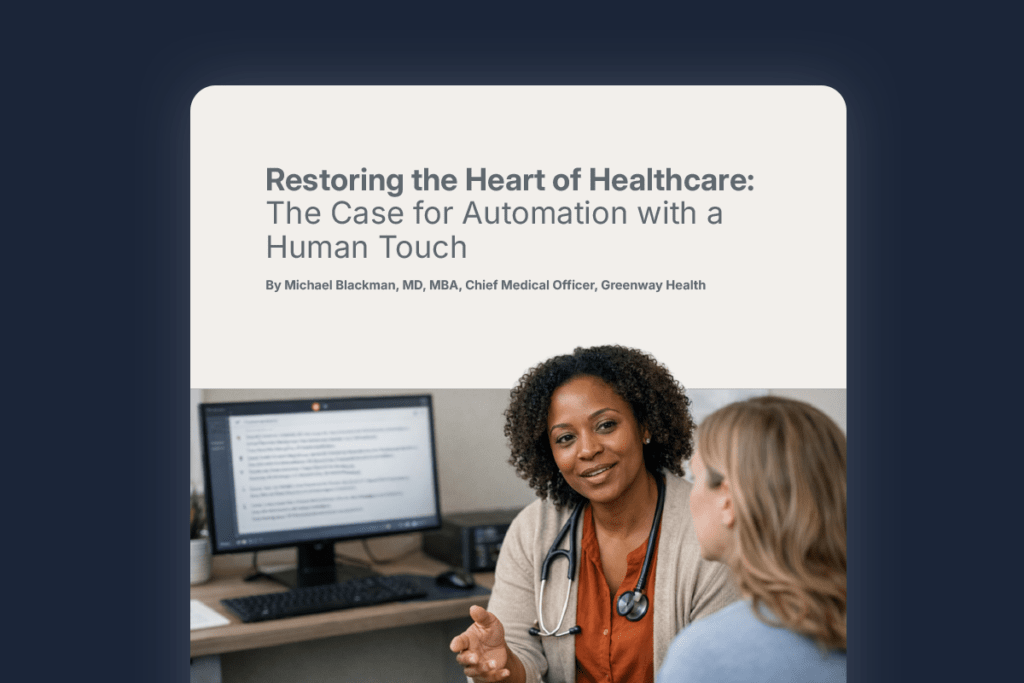
Used appropriately, healthcare AI has tremendous potential to support clinicians without replacing their expertise. We are already seeing that with clinical documentation.
Ambient documentation technology can listen to a patient-clinician conversation and generate a draft of the clinical note. Instead of starting with a blank page and authoring the entire note, the clinician becomes the editor.
But becoming the editor does not eliminate responsibility for the final product. The clinician still needs to determine whether the note accurately reflects the encounter, make necessary changes, apply clinical judgment, and ultimately sign it.
At the same time, that shift can create meaningful benefits. When documentation is built from the conversation rather than requiring the clinician to continuously turn toward a keyboard, it can allow for a more natural interaction with the patient.
The same principle applies beyond documentation. AI can help clinicians navigate information in a patient chart, retrieve relevant details, organize messages, and prioritize tasks.
In each case, AI contributes to the work of the care team. But contribution and decision-making are not the same thing.
Responsible Healthcare AI Should “Show Its Work”
There is an old lesson many of us heard repeatedly in math class: Show your work.
We should ask the same thing of AI.
If an AI tool generates a recommendation or surfaces information that could influence a decision, we should be able to ask: How did you arrive at that answer? What evidence supports it? Where did that information come from?
And when we are uncertain, we need to verify that supporting evidence.
This is not fundamentally different from how clinicians already think. Clinical practice involves evaluating evidence, considering alternatives, assessing risk, and applying professional judgment. Responsible AI integration in healthcare should reinforce those habits, not encourage clinicians to treat an AI-generated answer as an endpoint.
Technology can help us get to relevant information faster. It cannot remove our responsibility to determine whether that information is appropriate for the patient in front of us.
Build AI Around Healthcare Workflows, Not the Other Way Around
The pace of AI development can make it tempting to start with the technology. A new capability arrives, and the immediate question becomes, “How can we use this?”
We need to reverse that question with the problem.
Where are clinicians spending time on work that does not require their highest level of expertise? Where are existing healthcare workflows creating unnecessary cognitive burden? Then ask whether AI can help.
Adding another tool does not necessarily make work easier. If clinicians have to leave their workflow, open another application, or move information between systems, we may introduce new complexity while trying to solve the old complexity.
AI should be embedded into workflows so that it reduces cognitive burden rather than adding to it. Instead of layering technology onto workflows that are already fragmented, we have an opportunity to rethink those workflows around what clinicians actually need.
AI in Healthcare Can Give Clinicians Time Back
Burnout is one of healthcare’s most persistent challenges, and there isn’t a single technology that will solve it. AI is no exception.
What it can offer are incremental improvements across many parts of the day.
AI assisted documentation gives a clinician some time back. AI-assisted chart review can tee up important information before an visit. Intelligent task management can help prioritize incoming messages. Each improvement may be small on its own, but together, those minutes add up.
More importantly, AI can change what clinicians spend their mental energy doing.
The goal should be to allow people to work at the top of their license and focus on the more cognitively challenging, interesting, and meaningful parts of medicine. Technology can take on more of the work it is good at, giving clinicians greater capacity for the work that requires a human.
Trust in Healthcare AI Starts With Transparency
That principle is just as important for patients as it is for clinicians.
Some patients may hear “AI” and worry that a machine is making decisions about their health. We have a responsibility to explain what the technology is doing and, equally importantly, what it is not doing.
Consider ambient documentation. Rather than simply telling a patient that AI is being used, a clinician can explain the purpose: This tool helps capture our conversation so I can spend more of my time focused on you.
AI can also help make information more accessible after the visit, such as summarizing instructions in a way that patients can more easily understand and use.
Transparency helps patients understand that AI is there to support the care relationship, not replace it.
The Future of AI in Healthcare Still Depends on People
AI will continue to become more capable, and its role across healthcare workflows will continue to expand. That makes human oversight more important, not less.
The most effective AI will not ask clinicians to surrender their judgment. It will surface information, reduce repetitive work, organize complexity, and create more time for clinicians to apply their judgment where it matters most.
That is the future I find most compelling: not AI replacing members of the healthcare team, but AI becoming a useful member of that team.
Technology can draft, organize, prioritize, and summarize. Clinicians bring context, experience, accountability, and an understanding of the person behind the data.
When we combine those strengths thoughtfully, AI can do more than make healthcare faster. It can give clinicians more time for the patients who depend on them.
Get in touch with us to find out how Greenway Health can give you back more time for care.
About the author
Taking a team approach to healthcare technology A primary care physician at heart, Dr. Blackman brings an extensive background in health IT product management along with his knowledge of outpatient and inpatient care. He believes healthcare is a team sport that requires the talents of…
More by Dr. Michael Blackman