A Day in the Life of a High-Performing RCM Team
Monday, June 15, 2026
Revenue cycle teams are always managing competing demands. Verifying eligibility before the patient arrives, keeping claim submissions clean, tracking down prior authorizations, and responding to denials. At the same time, the environment they’re working in never stops shifting. Payer rules change, insurance coverage lapses mid-treatment, coding requirements evolve, and reimbursement timelines stretch.
Most teams are doing all of this while carrying more administrative weight than the work requires.
The difference between revenue cycle teams that consistently perform and those that constantly feel behind isn’t effort; it’s infrastructure. The right platform removes the friction that turns a manageable workflow into a reactive one: automating eligibility checks, reducing manual re-entry between clinical and billing systems, and flagging coding gaps before a claim goes out the door. When the infrastructure works the way it should, the team can focus on the work that actually requires human judgment.
This is what a day in the life of a high-performing revenue cycle team looks like, from the first patient of the morning to the close of business.

6:45 a.m.: The day starts before the first patient arrives
The front desk team opens their worklist. Insurance has been verified overnight. Prior authorizations are confirmed. Missing information is already flagged for follow-up. A few items need attention before the first appointment, but most do not.
The team addresses the exceptions and moves on. Nobody is logging into a payer portal at 7:00 a.m. Nobody is calling a patient at 8:15 a.m. to ask about an insurance card.
#1: High-performing RCM teams automate the work that does not require a human decision.
Eligibility checks, prior authorization status updates, and appointment reminders should not consume front desk hours every morning. The most successful RCM teams automate those tasks and redirect their team’s time to patient intake and the coverage questions that actually need a person to resolve them.
9:00 a.m.: Documentation that stays in the building
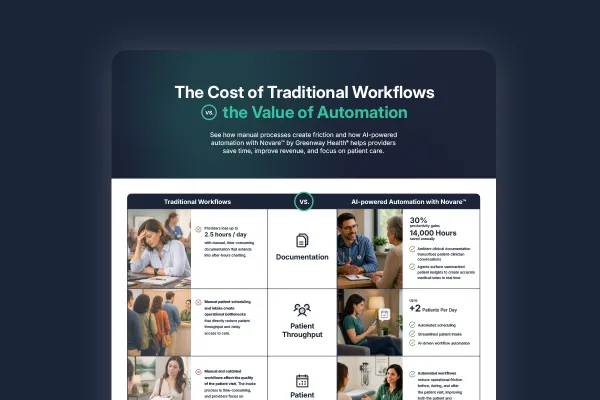
In a high-performing practice, documentation happens during the visit. Ambient tools capture the encounter in real time and generate a structured clinical note. The provider reviews it and signs off in under two minutes.
There is no charting queue building up at noon. There are no notes completed at midnight. A finished note moves directly into coding and billing the same day.
#2: High-performing RCM teams close the loop between documentation and billing before the day ends.
Fewer manual handoffs mean fewer chances for delays and errors. When clinical data flows directly from the encounter into the claim, problems can be prevented before they start. The note does not wait. The claim does not wait. Cash flow reflects it.

11:30 a.m.: The coder who reviews instead of rebuilds
At most practices, coding is still manual. The coder reads the note, assigns codes, checks payer rules, and submits. The work is accurate and skilled. It is also slow.
At a high-performing practice, AI generates the first-pass codes directly from the documented encounter. The coder reviews the claim, confirms accuracy, catches exceptions, and moves on. First-pass clean claim rates go up. Rework goes down.
#3: High-performing RCM teams use AI on the first pass so coders can focus on the exceptions.
Coding expertise matters most on complex cases, ambiguous documentation, and high-risk claims. Skilled coders rebuilding straightforward claims from scratch every day is an expensive use of a limited resource. High performers protect that resource by designing around it.
1:45 p.m.: Denials get worked, not filed away
Every practice gets denials. What separates high performers is what happens next.
In most practices, denials accumulate through the week. By Friday, some sit close enough to the timely filing limit that the team triages instead of appeals. Some fall through entirely.
In a high-performing practice, denials route automatically by type, payer, and priority. The biller works a managed queue. Appeals go out quickly. Patterns become visible across the queue: a payer that started rejecting a specific code, a documentation gap that appears across multiple providers. The manager sees it. The team corrects it before the next batch of claims goes out. And over time, the system doesn’t just correct those patterns—it learns them, anticipates them, and prevents them from happening in the first place.
#4: High-performing RCM teams proactively address denials and use denial data to close the upstream gap.

4:00 p.m.: The manager who can see the whole picture
At the end of the day, the revenue cycle manager reviews real-time performance data. Not a spreadsheet pulled from three separate reports. Not numbers that are two weeks old when they surface.
When a payer’s clean claim rate drops, the manager notices it before it becomes a cash-flow problem. When a provider’s documentation starts generating more rework, the conversation happens that week, not at the end of the quarter.
#5: High-performing RCM teams make decisions based on current data, not lagging reports.
The real difference is infrastructure, not effort.
The people on high-performing RCM teams are not more talented than those on struggling teams. They work within a system that handles routine tasks automatically, so they can focus on the work that requires judgment.
*Results based on a 10-provider practice with 15 staff members, $4.6M in annual revenue, and 46-48K encounters/year.