Strong User Support and Training Resources: What Ambulatory Practices Should Expect From an EHR Vendor
Wednesday, September 16, 2026
When comparing ambulatory EHR vendors, strong user support and training resources often decide whether the new EHR adoption succeeds or fails. The demo looks impressive. The feature list reads well. But when go-live arrives, your front desk, billers, and providers are left guessing. Sound familiar? Here’s the hard truth: even the best platform can underperform when little to no training is provided to your team. The right vendor won’t simply hand you a login and then disappear. It works together with your practice, before, during, and long after launch, to ensure the tools actually perform, and providers can gain additional time for patient care.
Why Support Changes the Vendor Conversation
At Greenway Health®, we’ve onboarded ambulatory practices onto Novare™ by Greenway Health, so we’ve seen firsthand the difference training makes. Through our work with more than 40+ specialties, we’ve learned that support isn’t just another expense. It’s the bridge between purchasing software and realizing its full value. More than any feature list, training and ongoing support determine whether technology truly returns time to care.
In this post, we’ll discuss:
- Why onboarding quality predicts long-term operational efficiency
- How role-based training lifts feature utilization and user satisfaction
- What responsive customer service looks like when it counts
- How ongoing support keeps your practice ahead of constant change
- The questions to ask every vendor before you sign
By the end, you’ll have a clear checklist for evaluating training and support, and you’ll be able to compare vendors with confidence.
Onboarding Sets the Tone for Everything That Follows
A smooth onboarding process is the strongest sign of a vendor worth trusting. When implementation is thoughtful, your team is able to walk into go-live feeling prepared, not panicked. Plus, faster onboarding means clinicians spend less time learning tools and more time delivering care.
Onboarding should never be a one-size-fits-all script. A busy pediatric practice and a multi-site cardiology group have different workflows, billing rhythms, and pain points. Vendors that provide great onboarding services respect those differences and treats setup as a sequence of well-timed activities, not a single event.
Here’s what a typical strong onboarding path includes:
- Discovery: Vendor learns your workflows, specialties, and goals before touching any settings.
- Data Migration: Your historical records move cleanly, so nothing important is lost in the transition.
- Workflow Optimization: Instead of copying old habits, you’ll refine and adapt them to your new, modern platform.
- Guided Launch: Real support is present on the day it matters most, not a ticket queue.
- Measured Milestones: Clear weekly goals for each week keeps progress visible.
At Greenway, our Professional Services and Revenue Cycle Management teams handle implementation, training, data migration, and workflow optimization together, so the practice isn’t stitching support across strangers. For Novare specifically, onboarding centers on real workflows: documentation, medical coding, and revenue tasks that are trained in the same sequence they occur in your practice. That alignment shortens ramp time and reduces after-visit cleanup.
Try this: Ask a potential vendor to map your first 90 days in writing, tied to measurable milestones such as visit throughput, claim submission accuracy, and documentation completion time. If they cannot produce a realistic plan, that silence tells you plenty.
Role-Based Training Drives Feature Utilization
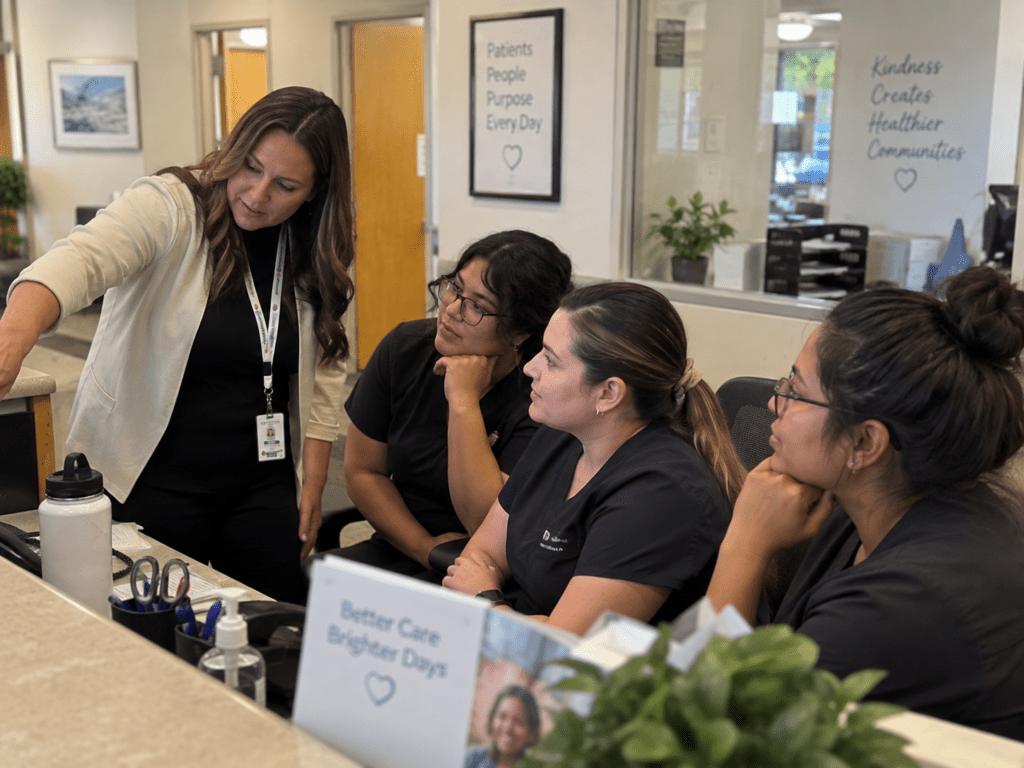
Training works best when it speaks to the person doing the job. A provider doesn’t need the same lesson as a biller, and a scheduler doesn’t need to sit through a revenue cycle deep dive. Yet generic training tries to teach everyone everything at the same time, meaning most learn nothing.
Role-based training, however, changes that. It gives each team member exactly what they need to master within their part of the workflow, which is how feature utilization improves across the organization.
What Role-Based Training Looks Like in Practice
- Providers learn ambient AI documentation, voice-activated chart search, and AI-powered patient summaries for pre-visit context.
- Billers and coders learn real-time HCC and CPT coding assistance with writeback, prioritized worklists, and the revenue analytics dashboard.
- Front desk staff learn scheduling, real-time insurance eligibility checks, and automated prior authorization processing.
- Administrators learn multi-site administration, reporting, and Practice Analytics® for clinical and financial performance.
When people learn the tools tied to their daily work, adoption sticks. Novare was built as an AI-by-design EHR, not a legacy system with AI bolted on, so training focuses on completing work during the visit, not cleaning it up after hours. Because AI-powered support is embedded within the workflow, documentation, coding, and next steps are completed during the encounter rather than pushed into after-visit cleanup.
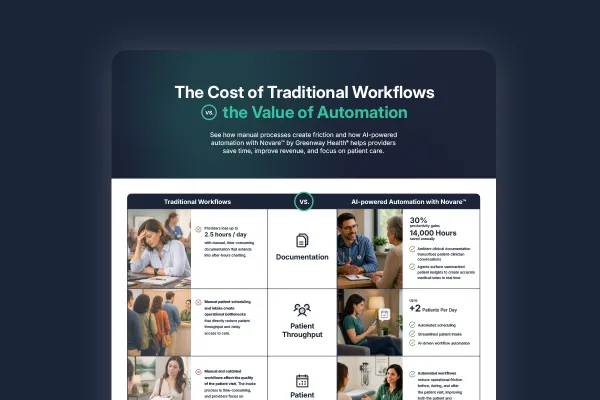
The payoff is real. With Novare, a 10-provider practice with 15 staff members, could achieve up to 45% productivity gains through AI-driven workflows and up to 21,000 hours saved annually.
Ask yourself: Does the vendor train your team by role, or everyone at the same time?
Strong User Support and Training Resources Should Stay Available After Launch
The best vendors treat launch day as the beginning, not the finish line. Strong user support and training resources matter most in the weeks and months after launch, when new questions surface and staff turnover brings fresh faces who need to get up to speed fast.
Resource accessibility is the quiet hero here. Training materials must be both detailed and easy to reach, so a new medical assistant and an experienced physician can each find help the moment they need it. When answers are easy to reach, small problems stay small.
Common signs of durable, ongoing support:
- Self-service resources your team can search anytime: short video tutorials, scenario-based guides, and quick-reference cheat-sheets.
- Responsive customer service with real people who understand ambulatory workflows, not just ticket queues.
- Refresher training for new hires and new features, so knowledge isn’t lost.
- Proactive check-ins and quarterly optimization reviews that catch issues before they become frustrations.
Ongoing support protects the investment you already made. A feature you cannot find easily is a feature you never truly bought. When your billers can get help closing a tricky claim, or a provider can quickly relearn Magic Edit for structured note refinement, the whole practice keeps moving.
Bookmark this tip: During your evaluation, submit a real support question and time the reply. The response you get as a prospect, hints at the response you’ll get as a customer.
Support Keeps Your Practice Ready for Continual Change
Healthcare never sits still, and neither can your EHR support. Regulatory updates, incentive program criteria, and documentation requirements shift year after year. A support team that helps you adapt is a partner in your practice’s stability, not just a help desk.
As value-based care continues to reshape reimbursement, your practice needs tools and guidance that simplifies reporting and keeps you compliant. This is where guidance and technology have to work together.
How the right support model absorbs change:
- Revenue Cycle Management Services help reduce denials and maximize revenue as payer rules evolve.
- Care Coordination Services support chronic care management and remote patient monitoring with automated workflows.
- Interpreter Services help you serve every patient with clarity and respect.
- Practice Analytics® turns clinical and financial data into decisions you can defend.
The result of intelligent workflows and steady guidance is measurable. With Novare, a 10-provider practice with 15 staff members and $4.6M in revenue could achieve 35% higher revenue, capturing an additional $1.7M through intelligent coding suggestions and increased patient capacity.
When your vendor helps you navigate change, you’ll spend less energy reacting and more energy on caring for patients. The right support doesn’t just answer questions, it prevents them. That’s the difference between a tool you tolerate and a platform you trust.
The Credibility Test: What To Ask Before You Sign
Vendor claims are easy to make and harder to prove, so bring a checklist to every conversation. The strongest partners welcome tough questions because their answers hold up.
Questions worth asking every ambulatory EHR vendor:
- What does the first 90 days of onboarding include, in writing?
- Do you offer role-based training for providers, billers, front desk staff, and administrators?
- How do new hires get trained after go-live?
- What is your average support response time?
- How do you help us stay compliant as regulations change?
Independent recognition adds useful context, too. Greenway Health was recently named “Most Improved Physician Practice Solution 2026” by KLAS Research, a category that measures meaningful progress in customer satisfaction, product performance, and support for ambulatory practices.
Recognition alone doesn’t run your practice, but when paired with responsive support and role-based training, it signals a vendor that shows up. Greenway® Clinical Assist, embedded AI documentation, and unified workflows only deliver when your team knows how to use them, and when someone answers the phone. That’s the standard every vendor should be held to.
Bringing It All Together
Choosing an ambulatory EHR is really choosing a partner for the years ahead. As you compare vendors, weigh these takeaways:
- Onboarding quality predicts whether go-live builds momentum or friction.
- Role-based training lifts feature utilization and user satisfaction across every seat.
- Responsive customer service and accessible resources keep small problems small.
- Ongoing support protects your investment and keeps you ready for change.
Software returns time to care only when your team knows how to use it, and that’s why strong user support and training resources belong at the top of your selection criteria, not the bottom. The practices that thrive are the ones that refuse to settle for a login and a shrug.
So here is the challenge: which vendor is willing to prove, before you sign, that they’ll stand beside your team long after launch?